
Colorectal cancer, a malignancy originating in the colon or rectum, represents a significant public health concern globally. Its progression often begins with the formation of benign growths known as polyps on the inner lining of the large intestine, some of which can evolve into cancerous tumors over time. Understanding the nuances of colorectal cancer symptoms & treatment is paramount for effective disease management and improved patient outcomes.
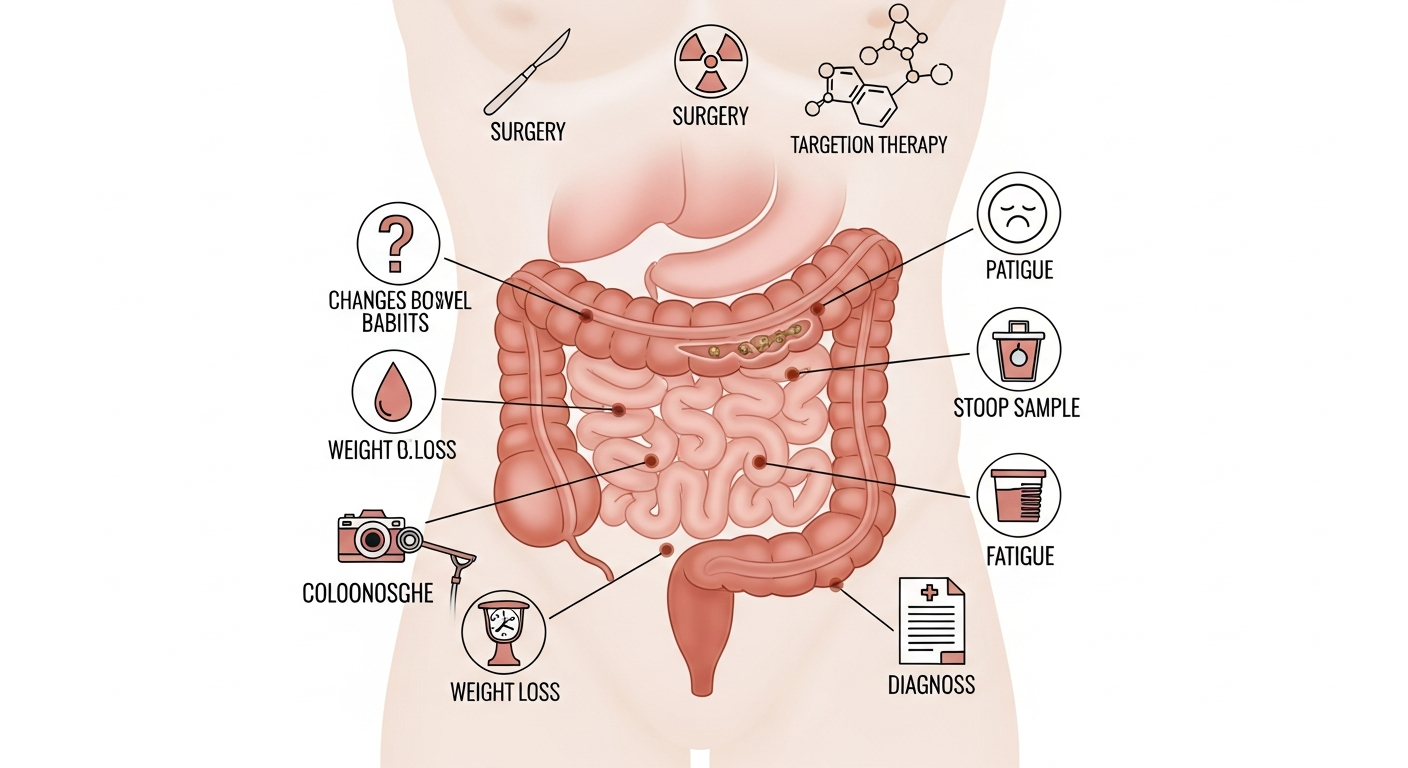
The Genesis of Colorectal Cancer
The large intestine, comprising the colon and rectum, plays a crucial role in the digestive system, primarily absorbing water and electrolytes and forming stool. Colorectal cancer typically arises from adenomatous polyps, which are abnormal cell growths. While not all polyps become cancerous, their presence necessitates careful monitoring and removal. The transformation from a benign polyp to an invasive carcinoma can take several years, highlighting a critical window for intervention through screening.
Identifying Colorectal Cancer Symptoms: Early Detection is Key
Recognizing colorectal cancer symptoms can be challenging, as early-stage disease often presents with no discernible signs or only very subtle ones. This asymptomatic phase underscores the importance of routine screening, even in the absence of noticeable health issues. When symptoms do emerge, they can vary widely depending on the tumor’s size, location, and spread.
Common Symptoms to Monitor:
- Changes in Bowel Habits: Persistent alterations such as diarrhea, constipation, or a narrowing of the stool that lasts for more than a few days.
- Rectal Bleeding or Blood in Stool: Bright red blood, dark blood mixed with stool, or black, tarry stools (melena) can indicate bleeding in the digestive tract. While other conditions can cause these symptoms, they warrant immediate medical evaluation.
- Persistent Abdominal Discomfort: Ongoing cramps, gas, or pain that does not resolve.
- A Feeling That Your Bowel Doesn’t Empty Completely: Tenesmus, a sensation of incomplete defecation, especially common with rectal tumors.
- Unexplained Weight Loss: Significant and unintentional reduction in body weight.
- Fatigue and Weakness: Often a result of iron-deficiency anemia caused by chronic blood loss from the tumor.
It is crucial to note that many of these symptoms can also be attributed to less serious conditions, such as hemorrhoids, irritable bowel syndrome, or dietary issues. However, persistence of any of these signs, particularly if new or worsening, necessitates prompt consultation with a healthcare professional to investigate potential colorectal cancer symptoms.
Risk Factors Associated with Colorectal Cancer
While the exact cause of colorectal cancer is not always clear, several factors have been identified that can increase an individual’s risk. These can be broadly categorized into non-modifiable and modifiable risks.
Non-Modifiable Risk Factors:
- Age: The risk of colorectal cancer increases significantly with age, with most diagnoses occurring in individuals over 50.
- Personal History of Polyps or Colorectal Cancer: Individuals who have previously had adenomatous polyps or colorectal cancer are at higher risk of recurrence.
- Family History: A strong family history, especially in first-degree relatives (parents, siblings, children), particularly if diagnosed at a young age, elevates risk.
- Inherited Syndromes: Genetic conditions like Familial Adenomatous Polyposis (FAP) and Lynch Syndrome (hereditary non-polyposis colorectal cancer or HNPCC) dramatically increase the lifetime risk.
- Inflammatory Bowel Disease (IBD): Chronic inflammatory conditions such as ulcerative colitis and Crohn’s disease increase risk over time.
- Racial and Ethnic Background: Certain groups, such as Ashkenazi Jews, have a higher risk.
Modifiable Risk Factors:
- Diet: Diets high in red and processed meats and low in fruits, vegetables, and fiber are associated with increased risk.
- Obesity: Being overweight or obese is linked to a higher risk in both men and women.
- Physical Inactivity: A sedentary lifestyle can contribute to increased risk.
- Smoking: Tobacco use is a known risk factor for several cancers, including colorectal cancer.
- Heavy Alcohol Use: Excessive alcohol consumption has been linked to an elevated risk.
- Type 2 Diabetes: Individuals with type 2 diabetes have a higher risk.
Understanding these risk factors can help individuals and healthcare providers make informed decisions about screening frequency and lifestyle modifications to mitigate potential risks associated with colorectal cancer symptoms & treatment.
Screening and Diagnosis: The Pathway to Early Intervention
Early detection through regular screening is a cornerstone of effective colorectal cancer management. Screening aims to identify polyps before they become cancerous or to detect cancer at its earliest, most treatable stages. Several methods are available, each with its own advantages and limitations.
Screening Methods:
- Colonoscopy: Considered the gold standard, this procedure involves inserting a flexible, lighted tube with a camera into the colon and rectum to visualize the entire lining. It allows for the detection and removal of polyps during the same procedure.
- Flexible Sigmoidoscopy: Similar to a colonoscopy but examines only the lower part of the colon and the rectum.
- Stool-Based Tests:
- Fecal Immunochemical Test (FIT): Detects human blood in the stool.
- Guaiac-Based Fecal Occult Blood Test (gFOBT): Detects hidden blood in the stool using a chemical reaction.
- Stool DNA Tests (e.g., Cologuard): Analyzes stool samples for abnormal DNA associated with colorectal cancer and polyps.
- CT Colonography (Virtual Colonoscopy): Uses CT scans to create detailed images of the colon and rectum.
Recommendations for screening typically begin at age 45 for individuals at average risk, with frequency varying based on the method used and individual risk factors. Discussions with a healthcare provider are essential to determine the most appropriate screening strategy.
Diagnosis and Staging:
If screening tests suggest an abnormality, a definitive diagnosis is usually made through a colonoscopy with a biopsy. Tissue samples are then examined under a microscope by a pathologist. Once cancer is confirmed, further tests are conducted to determine the stage of the disease, which refers to how far the cancer has spread. Staging involves:
- Imaging Scans: CT, MRI, and PET scans help identify if the cancer has spread to lymph nodes or distant organs.
- Blood Tests: Carcinoembryonic antigen (CEA) levels may be monitored as a tumor marker, though it’s not used for initial diagnosis.
Accurate staging is critical as it guides the selection of the most effective colorectal cancer treatment plan.
Colorectal Cancer Treatment: A Multidisciplinary Approach
The management of colorectal cancer is often complex, requiring a multidisciplinary team approach involving surgeons, oncologists, radiation oncologists, and other specialists. Treatment strategies are tailored to the individual patient, considering the stage of the cancer, its location, the patient’s overall health, and genetic characteristics of the tumor.
Primary Treatment Modalities:
1. Surgery:
For localized colorectal cancer, surgery is typically the primary treatment. The goal is to remove the tumor and a margin of healthy tissue, along with nearby lymph nodes. Surgical options include:
- Polypectomy: For very early-stage cancers found in polyps, removed during colonoscopy.
- Local Excision: For small, early-stage rectal cancers that can be removed through the anus.
- Colectomy: Removal of part of the colon (partial colectomy) or the entire colon (total colectomy). The remaining healthy sections are reconnected (anastomosis).
- Proctectomy: Removal of part or all of the rectum.
- Ostomy: In some cases, a temporary or permanent opening (stoma) is created in the abdomen to divert waste into a bag (colostomy or ileostomy). This is often necessary if the bowel cannot be reconnected immediately or permanently.
Advances in surgical techniques, including laparoscopic and robotic-assisted surgery, often allow for less invasive procedures, leading to shorter hospital stays and quicker recovery times.
2. Chemotherapy:
Chemotherapy uses drugs to kill cancer cells throughout the body. It may be used in various scenarios:
- Adjuvant Therapy: Given after surgery to destroy any remaining cancer cells and reduce the risk of recurrence.
- Neoadjuvant Therapy: Administered before surgery to shrink larger tumors, making them easier to remove.
- Palliative Therapy: Used for advanced or metastatic cancer to relieve symptoms and extend life, rather than cure the disease.
Chemotherapy regimens often involve a combination of drugs, and the duration varies based on the individual’s situation and response to colorectal cancer treatment.
3. Radiation Therapy:
Radiation therapy uses high-energy rays to destroy cancer cells. It is more commonly used for rectal cancer than colon cancer, due to the rectum’s fixed position within the pelvis.
- Neoadjuvant Radiation: Administered before surgery to shrink rectal tumors and improve surgical outcomes.
- Adjuvant Radiation: Given after surgery to kill any remaining cancer cells and reduce local recurrence risk.
- Palliative Radiation: Used to relieve pain or other symptoms in advanced disease.
4. Targeted Therapy:
Targeted drugs focus on specific molecular pathways or proteins involved in cancer growth and survival. These therapies are often used for advanced colorectal cancer, particularly when tumors have certain genetic mutations. Genetic testing of the tumor is crucial to determine if a targeted therapy is appropriate.
5. Immunotherapy:
Immunotherapy harnesses the body’s own immune system to fight cancer. Certain colorectal cancers, particularly those with specific genetic characteristics like high microsatellite instability (MSI-H) or mismatch repair deficiency (dMMR), respond well to checkpoint inhibitor immunotherapy. These treatments can be highly effective in a subset of patients with advanced disease.
6. Palliative Care:
Integral to comprehensive colorectal cancer treatment at all stages, palliative care focuses on relieving symptoms, pain, and stress associated with the disease and its treatment, aiming to improve the quality of life for both the patient and their family.
Follow-up and Survivorship
After completing primary treatment, ongoing surveillance is essential to monitor for recurrence and manage long-term side effects. This typically involves regular physical examinations, blood tests (including CEA levels), colonoscopies, and imaging scans. Survivorship care also emphasizes lifestyle modifications, nutritional guidance, and psychological support to help individuals adapt to life after cancer.
The Evolving Landscape of Colorectal Cancer Research
Research continues to advance our understanding of colorectal cancer, leading to more personalized and effective treatments. Investigations into liquid biopsies for earlier detection and monitoring, novel targeted agents, and combinations of immunotherapy are underway. Genomic profiling of tumors is becoming increasingly sophisticated, allowing for bespoke treatment plans based on the unique molecular signature of each patient’s cancer. This continuous scientific inquiry holds promise for even better outcomes in the future for individuals facing this diagnosis.
Conclusion
Colorectal cancer, while a serious condition, is increasingly manageable, especially when detected early. A comprehensive understanding of colorectal cancer symptoms & treatment options empowers individuals to seek timely medical attention and engage actively in their care. The landscape of diagnosis and therapy is continually evolving, offering new avenues for hope and improved prognosis. Vigilance regarding symptoms, adherence to recommended screening guidelines, and access to advanced medical care collectively contribute to navigating the complexities of this disease.