
Prostate cancer remains a significant health concern globally, affecting millions of men. The landscape of prostate cancer treatment is complex and continuously evolving, offering a wide array of options tailored to individual circumstances. Understanding these various approaches is crucial for patients, their families, and healthcare providers in making informed decisions.
Understanding Prostate Cancer and Its Diagnosis
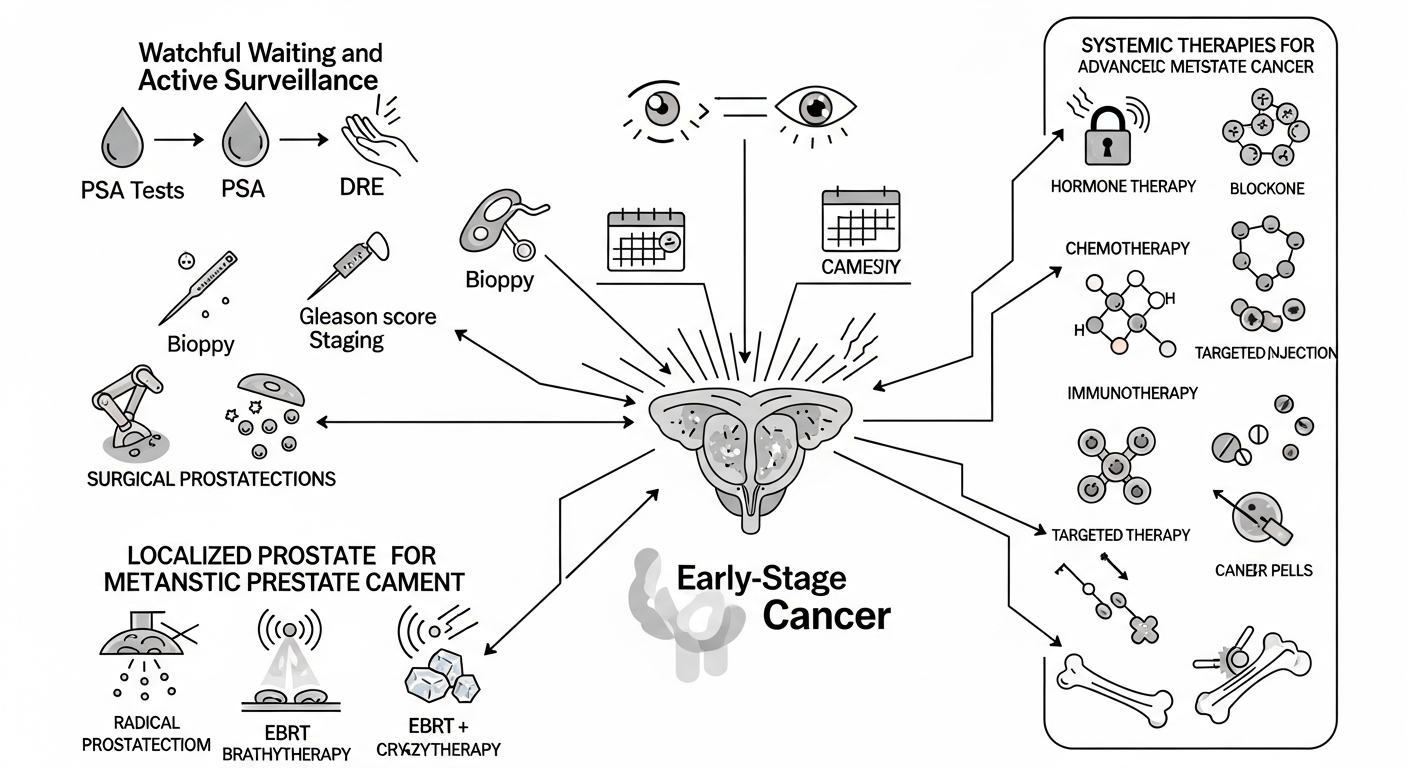
Prostate cancer originates in the prostate, a small gland in men that produces seminal fluid. Its progression can vary significantly, from slow-growing, localized tumors to aggressive, metastatic forms. Early detection often involves prostate-specific antigen (PSA) blood tests and digital rectal exams (DRE). If these raise suspicion, a biopsy is typically performed to confirm the diagnosis and determine the cancer’s aggressiveness using the Gleason score. Further imaging, such as MRI, CT, or bone scans, helps in staging the cancer, identifying if it has spread beyond the prostate, which profoundly impacts prostate cancer treatment strategies.
Factors Influencing Prostate Cancer Treatment Decisions
The choice of prostate cancer treatment is highly individualized. Several key factors are weighed by patients and their multidisciplinary medical teams:
- Cancer Stage and Grade: This includes the Gleason score (how aggressive the cancer cells appear under a microscope) and the TNM (Tumor, Node, Metastasis) staging system, which describes the size of the tumor, whether it has spread to nearby lymph nodes, and whether it has metastasized to distant parts of the body.
- Patient’s Age and Overall Health: Older men or those with significant comorbidities might be candidates for less aggressive treatments or active surveillance.
- Potential Side Effects: Each prostate cancer treatment option carries a unique profile of potential side effects, including urinary incontinence, erectile dysfunction, and bowel issues, which can significantly impact quality of life.
- Patient Preferences: Personal values, lifestyle, and willingness to accept certain risks or side effects play a vital role in shared decision-making.
Watchful Waiting and Active Surveillance
For men with low-risk prostate cancer, where the disease is localized, slow-growing, and unlikely to cause harm during their lifetime, watchful waiting or active surveillance may be considered. These are not forms of prostate cancer treatment in themselves but rather monitoring strategies.
- Active Surveillance: Involves close monitoring through regular PSA tests, DREs, and often repeat biopsies and MRI scans. The goal is to avoid or delay active treatment until there is evidence of disease progression, thereby delaying or avoiding treatment-related side effects. This approach is typically for very low-risk or low-risk localized prostate cancer.
- Watchful Waiting: A less intensive monitoring approach often considered for older men with other significant health issues, where the focus is on managing symptoms if they arise, rather than curative intent.
Localised Prostate Cancer Treatment Options
When prostate cancer is confined to the prostate gland, several curative options are available.
Surgical Interventions: Radical Prostatectomy
Radical prostatectomy is a surgical procedure to remove the entire prostate gland, along with some surrounding tissue and seminal vesicles. This can be performed in several ways:
- Open Radical Prostatectomy: Involves a single incision in the lower abdomen to access and remove the prostate.
- Laparoscopic Radical Prostatectomy: Performed through several small incisions using specialized instruments and a camera.
- Robotic-Assisted Laparoscopic Radical Prostatectomy: A more common variation where a surgeon controls robotic arms to perform the procedure, often leading to greater precision and potentially faster recovery.
Potential side effects of radical prostatectomy include urinary incontinence (difficulty controlling urine) and erectile dysfunction (difficulty achieving or maintaining an erection). Nerve-sparing techniques are often employed to minimize these risks, depending on the extent of the cancer.
Radiation Therapy
Radiation therapy uses high-energy rays to kill cancer cells. It can be delivered in various ways for prostate cancer treatment:
- External Beam Radiation Therapy (EBRT): Radiation is delivered from a machine outside the body. Advances in technology, such as Intensity-Modulated Radiation Therapy (IMRT), Stereotactic Body Radiation Therapy (SBRT), and Proton Therapy, allow for more precise targeting of the tumor while sparing healthy surrounding tissues, potentially reducing side effects. Treatment typically involves daily sessions over several weeks.
- Brachytherapy (Internal Radiation Therapy): Involves placing radioactive sources (seeds) directly into the prostate gland. This can be either a permanent low-dose rate (LDR) brachytherapy or a temporary high-dose rate (HDR) brachytherapy. Brachytherapy delivers a high dose of radiation directly to the tumor with minimal exposure to surrounding healthy tissue.
Side effects of radiation therapy can include fatigue, urinary irritation (frequent or painful urination), bowel irritation (diarrhea, rectal bleeding), and erectile dysfunction.
Focal Therapies
For very specific cases of localized prostate cancer, emerging focal therapies aim to destroy only the cancerous areas within the prostate, preserving surrounding healthy tissue. These include:
- High-Intensity Focused Ultrasound (HIFU): Uses highly focused ultrasound waves to heat and destroy cancer cells.
- Cryotherapy: Uses extreme cold to freeze and destroy cancer cells.
These approaches are less common than surgery or conventional radiation and are often considered experimental or for specific patient profiles due to ongoing research into their long-term efficacy and side effects.
Systemic Therapies for Advanced or Metastatic Prostate Cancer Treatment
When prostate cancer has spread beyond the prostate (metastatic disease) or recurs after initial local treatment, systemic therapies are often employed. These treatments target cancer cells throughout the body.
Hormone Therapy (Androgen Deprivation Therapy – ADT)
Prostate cancer cells often rely on male hormones (androgens, primarily testosterone) to grow. Hormone therapy aims to reduce the levels of androgens in the body or block their action.
- Luteinizing Hormone-Releasing Hormone (LHRH) Agonists and Antagonists: These medications reduce testosterone production by the testicles.
- Anti-androgens: These drugs block androgen receptors on cancer cells, preventing testosterone from stimulating their growth.
- Novel Hormonal Agents: Such as abiraterone and enzalutamide, work by further blocking androgen production or signaling, and are often used for castration-resistant prostate cancer (CRPC), where the cancer continues to grow despite low testosterone levels.
Side effects of hormone therapy can include hot flashes, fatigue, decreased libido, erectile dysfunction, bone thinning, and muscle loss.
Chemotherapy
Chemotherapy drugs work by destroying rapidly dividing cells, including cancer cells. It is typically used for advanced prostate cancer, especially when hormone therapy is no longer effective (CRPC). Common chemotherapy drugs for prostate cancer include docetaxel and cabazitaxel.
Side effects are varied and depend on the specific drugs used, but can include fatigue, nausea, hair loss, and increased risk of infection.
Immunotherapy
Immunotherapy harnesses the body’s own immune system to fight cancer. For prostate cancer treatment, checkpoint inhibitors (e.g., pembrolizumab) may be used for specific types of metastatic CRPC that exhibit certain genetic markers (like high microsatellite instability or mismatch repair deficiency). Sipuleucel-T, a cellular immunotherapy, is also available for some cases of asymptomatic or minimally symptomatic metastatic CRPC.
Side effects often relate to immune system overactivity, potentially affecting various organs.
Targeted Therapy
Targeted therapies focus on specific vulnerabilities within cancer cells. For prostate cancer, PARP inhibitors (e.g., olaparib, rucaparib) are an example of targeted therapy used for metastatic CRPC in men with specific DNA repair gene mutations (like BRCA1/2).
Bone-Targeted Therapies
Prostate cancer frequently spreads to the bones. Therapies like zoledronic acid and denosumab can help strengthen bones and reduce pain, fractures, and other skeletal-related events. Radium-223 is a radioactive drug that targets bone metastases, delivering radiation directly to cancer cells in the bone.
The Role of Clinical Trials
Clinical trials are research studies that investigate new treatments or new ways of using existing treatments. Participation in a clinical trial can offer access to cutting-edge prostate cancer treatment options not yet widely available. These trials are crucial for advancing medical knowledge and improving patient outcomes, but they also involve risks and uncertainties.
Shared Decision-Making and Quality of Life
Given the array of prostate cancer treatment options and their potential impact on quality of life, shared decision-making is paramount. This involves a collaborative process where patients, their families, and their healthcare team discuss the risks, benefits, and alternatives of each treatment, aligning choices with the patient’s values, preferences, and lifestyle goals. Comprehensive care often includes managing side effects, addressing emotional and psychological needs, and supporting overall well-being throughout the treatment journey and survivorship.
Conclusion
The field of prostate cancer treatment is dynamic, offering increasingly personalized and effective options. From watchful waiting for indolent disease to advanced systemic therapies for widespread cancer, the approach to managing prostate cancer is multifaceted. The careful consideration of disease characteristics, patient health, and individual preferences, in collaboration with a knowledgeable medical team, guides the selection of the most appropriate path forward. Continuous research and clinical advancements promise further refinements in the fight against this common cancer.