
The landscape of personal financial protection often presents numerous considerations, with term life insurance standing as a fundamental component for many individuals and families. Within this category, the choice between varying term lengths frequently emerges as a significant point of deliberation. A common comparison revolves around the implications of selecting a 10-year term versus a 20-year term, particularly concerning the associated rates and overall financial strategy.
Understanding Term Life Insurance Fundamentals
Term life insurance is a type of life insurance that provides coverage for a specific period, or “term,” typically ranging from 5 to 30 years. If the insured individual passes away during this term, a death benefit is paid to the designated beneficiaries. A defining characteristic of term life insurance is its straightforward nature: it is designed purely for protection, offering no cash value accumulation or investment component. Premiums for term policies are generally fixed for the duration of the chosen term, providing predictability in budgeting.
The primary purpose of term life insurance is to provide financial security for dependents or to cover specific financial obligations that have a defined end date. This could include safeguarding against lost income, paying off a mortgage, funding children’s education, or covering other significant debts. Understanding this fundamental purpose is crucial when evaluating the nuances of 10 year vs 20 year term life insurance rates, as the duration of coverage directly correlates with the period during which such financial responsibilities are likely to exist.
The Central Comparison: 10 Year vs 20 Year Term Life Insurance Rates
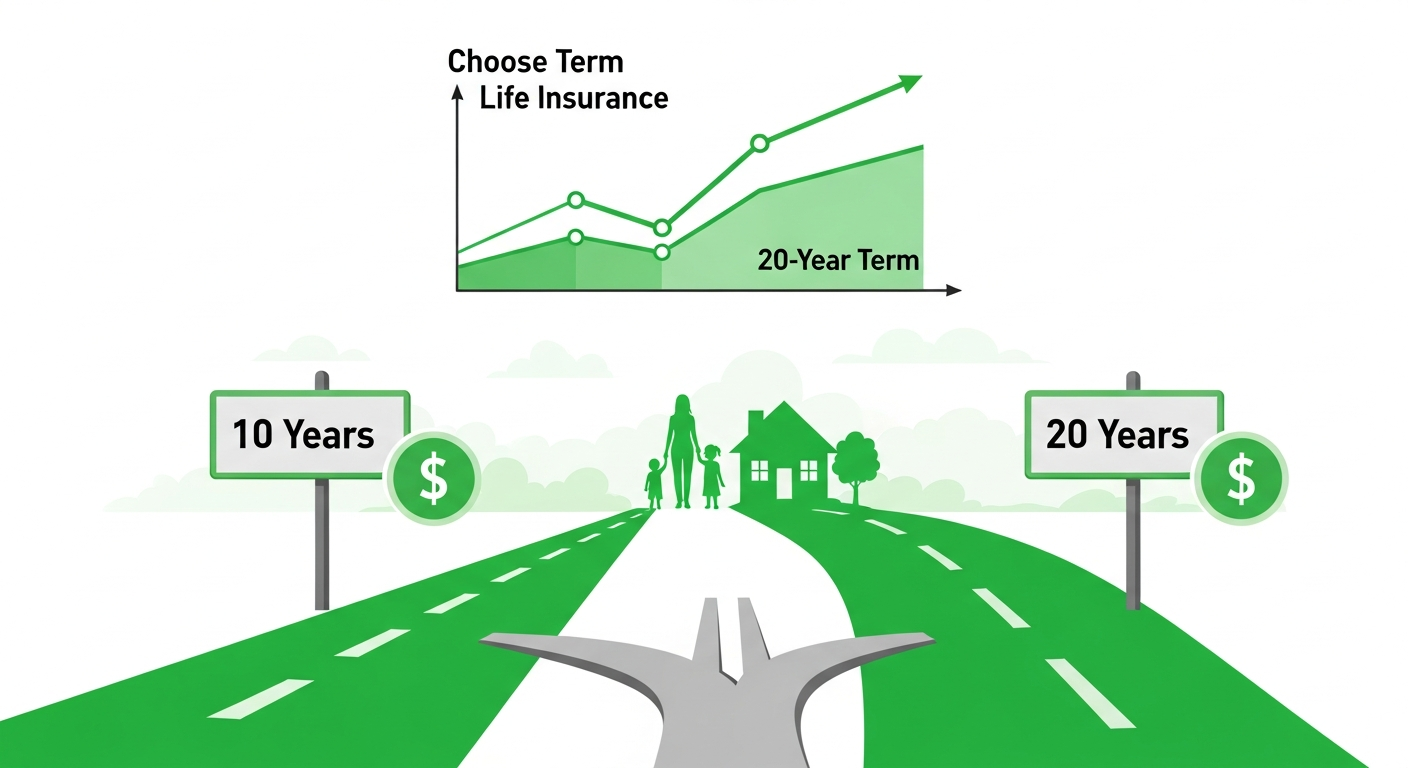
When individuals consider term life insurance, the length of the term is a pivotal decision that influences premiums and long-term financial planning. The comparison of 10 year vs 20 year term life insurance rates illustrates a fundamental principle of insurance pricing: the longer the period of coverage, the higher the perceived risk to the insurer, and consequently, the higher the premium.
Examining 10-Year Term Life Insurance
A 10-year term life insurance policy provides coverage for a decade. Generally, these policies are associated with lower initial premiums compared to longer-term options. This is primarily because the insurer is assessing the risk of the insured individual passing away over a shorter timeframe, during which significant health deterioration is statistically less likely to occur compared to a longer period. The actuarial calculations reflect this reduced short-term risk.
Individuals might consider a 10-year term in specific scenarios. For instance, if there are short-to-medium-term financial obligations such as a remaining personal loan, a car loan, or a period where dependents are expected to become financially independent within a decade. It can also serve as a temporary solution for those who anticipate a significant change in their financial situation or coverage needs in the near future, perhaps after a major debt is retired or a substantial savings goal is met. However, it is important to acknowledge that upon the expiry of a 10-year term, if continued coverage is desired, the policy would need to be renewed or a new policy purchased. At this juncture, the new 10-year term life insurance rates would be recalculated based on the individual’s older age and current health status, which could result in significantly higher premiums.
Examining 20-Year Term Life Insurance
Conversely, a 20-year term life insurance policy offers protection for two decades. The premiums for a 20-year term are typically higher than those for a 10-year term when purchased at the same age and health status. This increased cost reflects the insurer’s commitment to providing coverage for an extended period, encompassing a greater statistical probability of life events that could lead to a claim. The longer duration means the insurer assumes more risk over time, and this is factored into the initial pricing.
A 20-year term often aligns with longer-term financial planning objectives. Many individuals choose this term length to coincide with major financial responsibilities that span two decades, such as raising children from infancy through college, repaying a 15-to-20-year mortgage, or covering income replacement needs for a spouse until retirement. The benefit of a 20-year term lies in the extended period of rate stability and peace of mind. Policyholders secure their premiums for a substantial duration, avoiding the potential for premium increases that would likely occur after a 10-year term expires. While the initial 20-year term life insurance rates are higher, the long-term cost comparison can sometimes be more favorable if one considers the cumulative cost of renewing a 10-year policy multiple times as age advances.
Key Factors Influencing 10 Year vs 20 Year Term Life Insurance Rates
Understanding the differential between 10 year vs 20 year term life insurance rates necessitates an examination of the various elements that shape these costs. Insurance premiums are the result of complex actuarial calculations designed to assess risk, and several personal and external factors play a crucial role.
Age
Age is arguably the most significant determinant of term life insurance rates. As individuals age, the statistical likelihood of mortality increases. Consequently, applying for either a 10-year or a 20-year term life insurance policy at a younger age generally results in lower premiums. The impact of age is particularly pronounced when comparing rates for different terms. For instance, the increase in premiums from a 10-year to a 20-year term might be less severe for a 30-year-old than for a 50-year-old, simply because the actuarial risk escalation over an additional 10 years is steeper for older age groups.
Health Status and Medical History
An individual’s current health and past medical history are critical in underwriting. Insurers evaluate factors such as chronic conditions (e.g., diabetes, heart disease), recent diagnoses, family medical history, and overall physical condition. Excellent health typically leads to more favorable rates, regardless of the term length. Conversely, pre-existing conditions or a history of serious illness can significantly elevate premiums for both 10-year and 20-year term life insurance policies, as they indicate a higher risk of early mortality.
Lifestyle Choices
Lifestyle elements, including smoking, alcohol consumption, and engagement in hazardous hobbies, directly influence risk assessment. Smokers, for example, typically face substantially higher premiums than non-smokers due to the elevated health risks associated with tobacco use. Similar considerations apply to heavy alcohol consumption or participation in high-risk activities. These choices directly impact the statistical probability of a claim and thus influence the computed 10 year vs 20 year term life insurance rates.
Gender
Actuarial data generally indicates that women have a longer life expectancy than men. This demographic reality often translates into lower life insurance premiums for women compared to men of the same age and health profile, for both 10-year and 20-year term policies. This is a reflection of statistical mortality tables used in insurance pricing.
Coverage Amount (Death Benefit)
The total sum of money that beneficiaries would receive upon the insured’s passing, known as the death benefit, is a direct factor in premium calculation. Higher coverage amounts naturally lead to higher premiums. Whether an individual opts for a 10-year or a 20-year term, the desired death benefit will scale the cost proportionally. Determining an appropriate coverage amount is therefore an important precursor to comparing 10 year vs 20 year term life insurance rates.
Underwriting Process
The comprehensive review of an applicant’s information by an insurer, known as underwriting, consolidates all the aforementioned factors. This process involves reviewing medical exams, health questionnaires, prescription histories, and potentially motor vehicle records. The outcome of underwriting places the applicant into a specific risk class, which then dictates the final premium rates offered for either a 10-year or a 20-year term policy.
Financial Planning Implications of Term Length Choices
The decision between a 10-year and a 20-year term life insurance policy extends beyond just the immediate premium difference; it has significant implications for an individual’s broader financial planning and long-term stability. This choice should be viewed within the context of an overall financial strategy, considering both present budgetary constraints and future financial goals.
Budgeting Considerations
From a budgeting perspective, 10-year term life insurance rates are initially more attractive due to their lower cost. This can make them a viable option for individuals who have tighter immediate budgets but still recognize the need for financial protection. However, it is crucial to factor in the potential for higher renewal premiums at the end of the term, which could strain future budgets if not adequately planned for. A 20-year term, while demanding a higher initial outlay, offers the certainty of fixed premiums for an extended period, which can simplify long-term financial forecasting and budgeting.
Alignment with Long-Term Financial Goals
The term length should ideally align with the duration of an individual’s most significant financial obligations and the period during which dependents will rely on their income. For example, if an individual has a 20-year mortgage and young children, a 20-year term might provide comprehensive coverage until the mortgage is paid off and the children are financially independent. Opting for a 10-year term in such a scenario might leave a gap in coverage or necessitate purchasing a new, more expensive policy later. Therefore, the selection between 10 year vs 20 year term life insurance rates should be a strategic decision based on the longevity of financial responsibilities.
Renewability and Convertibility
Many term life insurance policies offer options for renewability and convertibility at the end of the term. Renewability allows the policyholder to extend coverage without a new medical exam, but typically at significantly higher, annually increasing premiums based on the attained age. Convertibility allows the policyholder to convert the term policy into a permanent life insurance policy without further medical underwriting, also usually at a higher premium. These features provide flexibility but come with their own cost implications, which are important to understand when evaluating the long-term viability of initial 10 year vs 20 year term life insurance rates.
Inflation and Economic Factors
While life insurance premiums are fixed for the term, the purchasing power of the death benefit can be eroded by inflation over time. A 20-year term policy locks in a death benefit amount for a longer duration, meaning its real value might diminish more significantly over time compared to a 10-year policy that could potentially be adjusted (via a new purchase) for current economic realities sooner. However, the stability of premiums for a 20-year term can be a hedge against increasing costs of coverage in the future, regardless of inflation. These broader economic considerations indirectly influence the perceived value and planning associated with 10 year vs 20 year term life insurance rates.
Analyzing Personal Needs for Term Length Selection
The decision regarding the optimal term length for life insurance coverage is highly individualized and necessitates a thorough analysis of personal circumstances and future projections. The comparison of 10 year vs 20 year term life insurance rates is not merely a quantitative exercise in cost difference, but a qualitative assessment of evolving life stages and financial responsibilities.
Identifying the Duration of Financial Obligations
A fundamental step in determining the appropriate term length involves cataloging and estimating the duration of significant financial obligations. This includes mortgages, outstanding loans (student, personal, business), and other debts that would require repayment even in the absence of the primary income earner. If these obligations are expected to conclude within a decade, a 10-year term might seem sufficient. However, if they extend beyond this, perhaps up to two decades, a 20-year term life insurance policy provides a more consistent and predictable shield against these long-term financial burdens.
Assessing Future Financial Dependents
The presence and future needs of financial dependents are paramount. Young children, for instance, typically require financial support for well over a decade, encompassing primary education, higher education, and early adulthood. A 20-year term often aligns well with the period during which children are financially dependent. If children are older or nearing financial independence, a shorter 10-year term could be more appropriate. Spousal reliance on income, particularly if one spouse is not employed or is nearing retirement, also influences the required duration of coverage. The potential period of reliance directly informs the suitability of 10 year vs 20 year term life insurance rates.
Considering Future Income Potential and Savings
An individual’s anticipated future income growth and savings trajectory also play a role. Those expecting significant increases in income or substantial asset accumulation over the next decade might feel comfortable with a shorter 10-year term, with the intention of self-insuring or reassessing needs later. Conversely, individuals who foresee a more stable income path or slower asset accumulation might prefer the extended security offered by a 20-year term, locking in rates for a longer period. This assessment helps evaluate the long-term value proposition of 10 year vs 20 year term life insurance rates against personal financial evolution.
The Dynamic Nature of Life Events
Life is unpredictable, and major events such as marriage, birth of children, career changes, or significant purchases (like a new home) can alter financial protection needs. While it is impossible to predict every event, considering the likelihood of such changes within the next 10 to 20 years can guide the term length decision. A longer 20-year term provides a buffer against the need for frequent reassessments and potential re-qualifications for new policies, which could come with higher premiums due to age and health changes.
A Deeper Look at Rate Structures and Actuarial Science
The differentiation in 10 year vs 20 year term life insurance rates is fundamentally rooted in actuarial science, which is the discipline that applies mathematical and statistical methods to assess risk in insurance. Insurers do not arbitrarily set premiums; instead, they rely on extensive data analysis to project future claims.
The Concept of Actuarial Risk Assessment
Actuaries analyze mortality tables, which are statistical tables showing the death rates for people of various ages. When pricing a 10-year term policy, actuaries project the mortality risk over a decade. For a 20-year term policy, they project the risk over two decades. As age advances, mortality rates increase, meaning the probability of a claim within any given year rises. This inherent increase in risk over time is the primary driver behind the higher cost of a longer-term policy when comparing 10 year vs 20 year term life insurance rates at the initial point of purchase.
How Insurers Project Mortality Over Different Timeframes
For a 10-year term, the insurer forecasts mortality based on the applicant’s current age and projected health trajectory for the next decade. The underwriting process aims to accurately place the individual within a risk class that reflects this short-to-medium-term outlook. For a 20-year term, the projection extends further into the future. Even if an individual is in excellent health at the time of application, the statistical probability of developing health issues or experiencing other life-shortening events increases significantly over a 20-year period compared to a 10-year period. This extended statistical exposure to risk is directly reflected in the elevated 20-year term life insurance rates.
The “Cost of Certainty” for Longer Terms
The higher initial premium for a 20-year term can be viewed as the “cost of certainty.” Policyholders pay a bit more upfront to lock in a guaranteed premium for a longer duration, thereby insulating themselves from potential health deterioration or rising age-based premiums that would occur if they had to reapply for coverage after a 10-year term. This certainty provides peace of mind and simplifies long-range financial planning, making the comparison of 10 year vs 20 year term life insurance rates a balance between immediate cost savings and future premium predictability.
General Market Overview and Industry Perspectives
The broader insurance market operates on principles of risk pooling and statistical analysis, which underpin how 10 year vs 20 year term life insurance rates are structured across the industry. While specific rates vary by provider, general trends and competitive dynamics play a role in the overall pricing landscape.
How the Insurance Market Generally Prices Risk
Insurers compete by offering varying rates, but all operate within the confines of actuarial soundness. They analyze vast amounts of data to understand mortality trends, illness prevalence, and accident statistics. This allows them to price policies that are competitive enough to attract customers while remaining sufficient to cover future claims and operational costs. The fundamental increase in risk associated with longer durations means that, across the market, 20-year term life insurance rates will consistently be higher than 10-year term life insurance rates for individuals of the same age and health profile.
The Competitive Landscape’s General Impact on Rates
The term life insurance market is generally competitive, which can lead to a range of pricing options for consumers. This competition encourages insurers to refine their underwriting processes and offer various products. However, the core actuarial principles governing the difference between 10 year vs 20 year term life insurance rates remain consistent regardless of the specific provider. While one insurer might offer slightly better rates for a 10-year term and another for a 20-year term, the general relationship—that longer terms cost more initially—holds true across the industry.
Industry perspectives often highlight the importance of aligning the term length with an individual’s financial needs horizon. Financial professionals generally advise that the term chosen should cover the period during which dependents would face significant financial hardship if the primary income earner were no longer present. This practical guidance reinforces the analytical approach to comparing 10 year vs 20 year term life insurance rates, moving beyond mere cost to encompass comprehensive financial protection.
Conclusion
The deliberation between a 10-year and a 20-year term life insurance policy is a multifaceted consideration, central to personal financial planning. While 10 year term life insurance rates typically present a lower initial premium, appealing to immediate budgetary concerns or shorter-term financial obligations, they inherently carry the prospect of higher renewal costs as age advances. Conversely, 20-year term life insurance rates, though higher at the outset, offer the advantage of rate stability and prolonged coverage, aligning more effectively with extended financial responsibilities such as long-term mortgages or the duration of raising a family. Factors such as age, health, lifestyle, and the desired coverage amount significantly influence both 10 year vs 20 year term life insurance rates, underscoring the personalized nature of insurance premium calculations. Ultimately, understanding these distinctions and their implications for long-term financial security is key when evaluating term life insurance options.