
Colorectal cancer, affecting the colon or rectum, represents a significant global health challenge. Understanding its manifestations and management is crucial for improving patient outcomes. This comprehensive guide explores the key aspects of colorectal cancer symptoms & treatment, providing insights into its detection and therapeutic strategies.
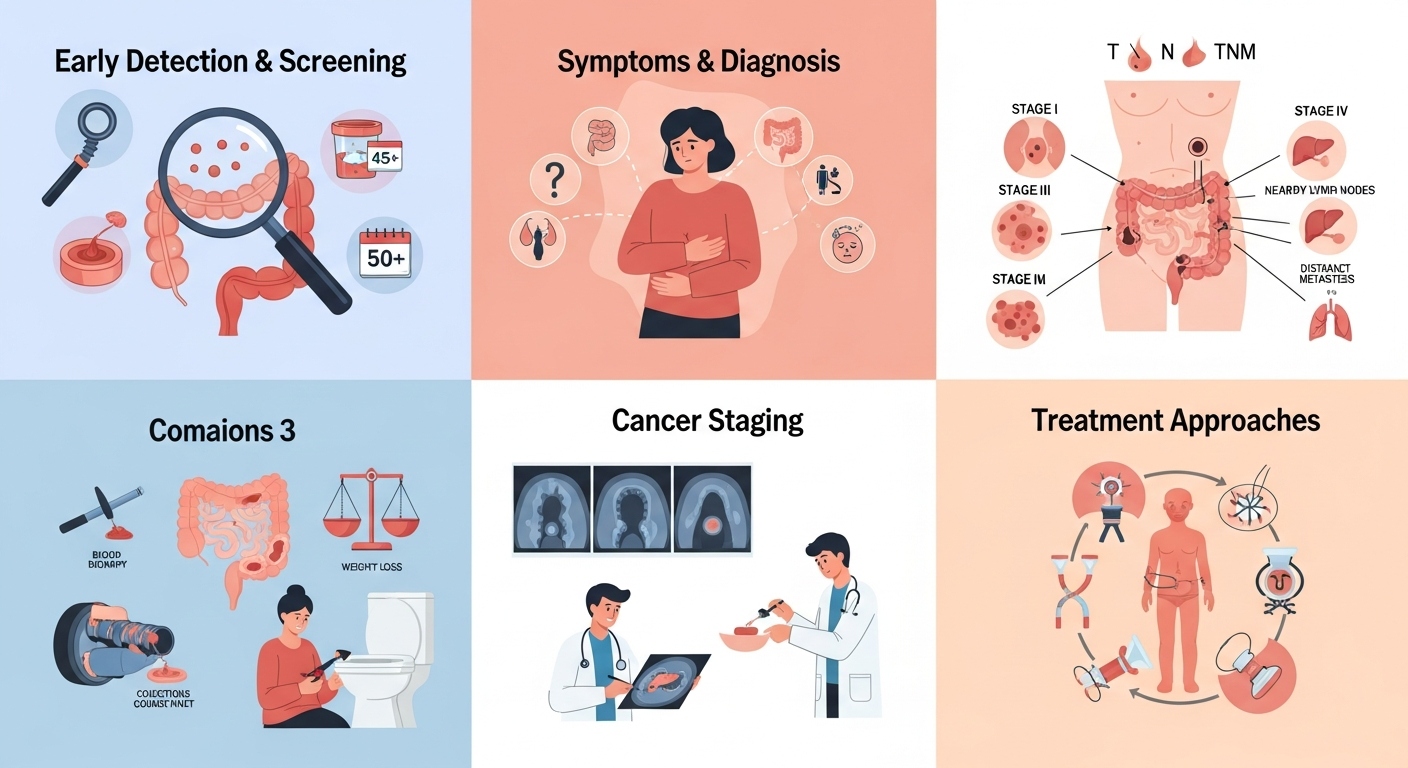
What is Colorectal Cancer?
Colorectal cancer begins in the large intestine (colon) or the rectum (the final section of the large intestine). It typically starts as small, noncancerous (benign) clumps of cells called polyps that form on the inner lining of the colon or rectum. Over time, some of these polyps can become cancerous. The disease is often treatable when detected early, highlighting the importance of awareness regarding its symptoms and available treatments.
Identifying Risk Factors
Several factors can increase an individual’s risk of developing colorectal cancer. These include:
- Age: The risk significantly increases after age 50, although rates in younger adults are rising.
- Personal or Family History of Colorectal Polyps or Cancer: Genetic predispositions play a substantial role.
- Inherited Syndromes: Conditions like Familial Adenomatous Polyposis (FAP) and Lynch Syndrome (HNPCC) dramatically increase risk.
- Inflammatory Bowel Disease (IBD): Chronic conditions like ulcerative colitis and Crohn’s disease can elevate risk.
- Lifestyle Factors: A diet high in red and processed meats, obesity, physical inactivity, smoking, and heavy alcohol use are associated with increased risk.
- Type 2 Diabetes: Individuals with type 2 diabetes have a higher risk.
Recognizing Colorectal Cancer Symptoms
Early stages of colorectal cancer often present no symptoms, which underscores the importance of regular screening. When symptoms do appear, they can vary depending on the cancer’s size and location. It is important to note that many of these symptoms can also be caused by other, less serious conditions. However, persistent or concerning symptoms warrant prompt medical evaluation.
Key colorectal cancer symptoms include:
- Changes in Bowel Habits: This can manifest as persistent diarrhea or constipation, or a change in the consistency of stool, lasting for more than a few days. Some individuals might experience a feeling that the bowel does not empty completely.
- Rectal Bleeding or Blood in Stool: Bright red blood on stool or toilet paper, or dark, tarry stools (melena), can be a sign. While often attributed to hemorrhoids, any blood in the stool should be investigated.
- Persistent Abdominal Discomfort: This may include cramps, gas, or pain that does not go away.
- Unexplained Weight Loss: Losing weight without trying can be a concerning symptom of various cancers, including colorectal cancer.
- Fatigue and Weakness: This can be a result of iron deficiency anemia, which occurs when blood loss from the tumor leads to a low red blood cell count.
- A Feeling of Incomplete Bowel Emptying: Even after having a bowel movement, some people might feel like their bowel hasn’t emptied completely.
- Narrow Stools: If the diameter of the stool becomes noticeably narrower than usual, it could indicate an obstruction.
If any of these symptoms are experienced, especially if they are new, persistent, or worsening, medical consultation is advised for proper diagnosis and to discuss potential colorectal cancer symptoms & treatment options if a diagnosis is made.
The Crucial Role of Screening and Early Detection
Given that colorectal cancer often presents no symptoms in its early, highly treatable stages, regular screening is paramount. Screening aims to detect polyps before they become cancerous or to find cancer at an early stage when treatment is most effective. Guidelines for screening vary slightly by organization and country, but generally recommend:
- Starting Age: Routine screening often begins at age 45 or 50 for individuals at average risk. Those with higher risk factors may need to start earlier and be screened more frequently.
- Common Screening Tests:
- Colonoscopy: Considered the gold standard, it allows direct visualization of the entire colon and rectum, enabling the removal of polyps during the procedure.
- Flexible Sigmoidoscopy: Examines only the lower part of the colon and rectum.
- Stool-Based Tests: These include Fecal Immunochemical Test (FIT), guaiac-based Fecal Occult Blood Test (gFOBT), and Stool DNA tests. These tests detect blood or abnormal DNA in stool samples and are less invasive, but a positive result usually necessitates a colonoscopy.
- CT Colonography (Virtual Colonoscopy): A radiological exam that creates detailed images of the colon.
Adherence to screening recommendations is a critical step in reducing the incidence and mortality of colorectal cancer. Discussing the appropriate screening regimen with a healthcare professional is essential for personalized guidance.
Diagnosing Colorectal Cancer
When symptoms suggest the possibility of colorectal cancer, or if a screening test yields an abnormal result, further diagnostic steps are taken:
- Medical History and Physical Exam: A physician will review symptoms, family history, and conduct a physical examination, which may include a digital rectal exam.
- Colonoscopy with Biopsy: If not already performed as a screening, a colonoscopy is typically the definitive diagnostic tool. Any suspicious areas or polyps are removed or biopsied (a small tissue sample is taken) and sent to a pathologist for microscopic examination to confirm the presence of cancer.
- Blood Tests:
- Complete Blood Count (CBC): To check for anemia, which can be caused by chronic blood loss from a tumor.
- Carcinoembryonic Antigen (CEA): A tumor marker that can be elevated in some colorectal cancer patients, often used to monitor treatment response and recurrence, rather than for initial diagnosis.
- Imaging Tests: Once cancer is diagnosed, imaging tests are used for staging – determining the extent of the cancer’s spread.
- CT Scans: Of the chest, abdomen, and pelvis to look for spread to other organs.
- MRI Scans: Particularly useful for rectal cancer to assess the depth of tumor invasion and involvement of nearby structures.
- PET Scans: May be used in some cases to detect distant metastases.
- Genetic Testing of the Tumor: Analyzing the tumor’s genetic mutations can help guide targeted therapy and immunotherapy decisions.
Staging Colorectal Cancer
Staging is a critical process that determines the extent of the cancer and guides treatment decisions. The most common system used is the TNM system, which assesses:
- T (Tumor): The size and extent of the primary tumor.
- N (Nodes): Whether the cancer has spread to nearby lymph nodes.
- M (Metastasis): Whether the cancer has spread to distant parts of the body (metastasized).
Stages range from Stage 0 (carcinoma in situ) to Stage IV (metastatic cancer). The stage significantly influences the prognosis and the recommended course of colorectal cancer symptoms & treatment.
Approaches to Colorectal Cancer Treatment
The management of colorectal cancer is complex and often involves a multidisciplinary team of specialists, including oncologists, surgeons, radiation oncologists, and pathologists. Treatment plans are highly individualized, depending on the cancer’s stage, location, the patient’s overall health, and genetic characteristics of the tumor. Advances in understanding colorectal cancer symptoms & treatment have led to more personalized and effective strategies.
1. Surgery
For most stages of colorectal cancer, surgery is the primary treatment. The goal is to remove the cancer and a margin of healthy tissue around it. Depending on the location and stage, surgical options include:
- Polypectomy or Local Excision: For very early-stage cancers or large polyps, often performed during a colonoscopy.
- Colectomy: Removal of part or all of the colon (hemicolectomy, subtotal colectomy, total colectomy). The remaining sections of the colon are then reconnected (anastomosis).
- Low Anterior Resection (LAR) or Abdominoperineal Resection (APR): Specifically for rectal cancer, often involving removal of the rectum.
- Laparoscopic Surgery: A minimally invasive approach using small incisions, often resulting in faster recovery.
- Open Surgery: Involves a larger incision, typically for more complex cases.
- Ostomy: In some cases, a temporary or permanent opening (stoma) is created in the abdominal wall, allowing stool to pass into a bag (colostomy or ileostomy). This is sometimes necessary if the remaining bowel cannot be reconnected or needs time to heal.
2. Chemotherapy
Chemotherapy uses drugs to kill cancer cells throughout the body. It may be used in several ways:
- Adjuvant Chemotherapy: Given after surgery to destroy any remaining cancer cells and reduce the risk of recurrence, especially in Stage III colon cancer and some Stage II cases.
- Neoadjuvant Chemotherapy: Given before surgery (often with radiation) to shrink large tumors, making them easier to remove, particularly for rectal cancer.
- Palliative Chemotherapy: For advanced or metastatic cancer, to control the disease, relieve symptoms, and improve quality of life.
Common chemotherapy drugs for colorectal cancer include 5-FU, capecitabine, oxaliplatin, and irinotecan, often used in combinations.
3. Radiation Therapy
Radiation therapy uses high-energy X-rays or other particles to kill cancer cells. It is more commonly used for rectal cancer than colon cancer due to the rectum’s fixed location and proximity to other organs:
- Neoadjuvant Radiation: Often given before surgery for rectal cancer to shrink the tumor and reduce the chance of recurrence.
- Adjuvant Radiation: Less common, sometimes used after surgery if there’s a high risk of local recurrence.
- Palliative Radiation: To relieve symptoms such as pain or bleeding in advanced disease.
4. Targeted Therapy
Targeted drugs are designed to interfere with specific molecules that are involved in the growth, progression, and spread of cancer cells, while minimizing harm to healthy cells. These therapies are often used for advanced or metastatic colorectal cancer and require testing the tumor for specific genetic mutations or biomarkers:
- EGFR Inhibitors: Such as cetuximab or panitumumab, for tumors that are wild-type (normal) for certain KRAS/NRAS genes.
- VEGF Inhibitors: Such as bevacizumab, which blocks the formation of new blood vessels that tumors need to grow.
- BRAF Inhibitors: For tumors with a specific BRAF mutation.
5. Immunotherapy
Immunotherapy harnesses the body’s own immune system to fight cancer. These drugs are effective in a subset of colorectal cancers that have specific genetic characteristics:
- Checkpoint Inhibitors: Drugs like pembrolizumab or nivolumab, which are used for metastatic colorectal cancers that are found to have high microsatellite instability (MSI-H) or a deficiency in mismatch repair (dMMR). These tumors respond well to immunotherapy because their high mutation rate makes them more visible to the immune system.
6. Combination Therapies and Personalized Medicine
Often, a combination of these treatments is used. For example, surgery might be followed by chemotherapy and, for rectal cancer, radiation. The field of oncology is increasingly moving towards personalized medicine, where treatment decisions are guided by the specific molecular characteristics of an individual’s tumor. This tailored approach, informed by genetic and molecular profiling, helps to optimize the effectiveness of colorectal cancer symptoms & treatment strategies.
7. Supportive and Palliative Care
Supportive care focuses on managing the physical symptoms and side effects of cancer and its treatment, as well as addressing the emotional and psychological needs of patients. Palliative care, which can be provided at any stage of cancer, aims to improve the quality of life for both the patient and their family by addressing pain and other distressing symptoms.
8. Follow-up Care
After treatment, regular follow-up appointments are essential. These typically involve physical exams, blood tests (including CEA levels), colonoscopies, and imaging scans to monitor for recurrence and manage any long-term side effects.
Living with Colorectal Cancer
A diagnosis of colorectal cancer significantly impacts an individual’s life. Beyond the medical treatments, navigating the emotional, psychological, and practical aspects of living with and beyond cancer is a journey in itself. Support groups, counseling, and engaging in healthy lifestyle practices can play a vital role in survivorship. Regular physical activity, a balanced diet, and avoiding smoking and excessive alcohol consumption are often encouraged to promote overall well-being and potentially reduce the risk of recurrence.
Conclusion
Colorectal cancer remains a substantial health challenge, yet significant advancements in understanding its causes, presentation, and management offer considerable hope. Awareness of colorectal cancer symptoms & treatment is fundamental. While symptoms can be subtle and non-specific in early stages, recognizing potential indicators and adhering to recommended screening guidelines are crucial for early detection. The landscape of treatment has evolved, now encompassing a range of sophisticated surgical techniques, targeted chemotherapy, radiation, and immunotherapies, often tailored to the individual characteristics of the tumor. This comprehensive approach underscores the ongoing efforts to improve outcomes and enhance the quality of life for those affected by this disease.